We are moving on, we are moving up our family tree.
 Please, welcome Immanuel Gottlieb Schochenmaier.
He is grandson of the Staff Sergeant Johann Christian (1690s-1750s) from the Stuttgart Infantery Regiment "Alt-Württemberg" and son of the Cloth Manufactory's Master (within the royal Workhouse) from Ludwigsburg Johann Christian (1724-1799). The orphans of the regiment were educated in the Workhouse that also produced military clothes for soldiers and horses. So, it's the turn of the 3rd generation of the Württemberg family.
1. Years of life
Immanuel Gottlieb was born in 1759, February 6. We can spot his parents Johann Christian and Anna Margaretha.

He had lived for 74 years and died in 1834, September 29. Besides that, it's noticed that he was widow (Wtwr) and died from dysentery ("Ruhr"). Mistakenly, he is named "Gottlob" instead of "Gottlieb".

On first reading, he had been given a pretty strange name - Immanuel Gottlieb. As for Gottlieb, I must precise that he had the uncle named Christoph Gottlieb (born 1722, Oct.), elder brother of Johann Christian (1724-1799). So, it's probably the second traditional or inherited name. What about Immanuel? Well, there are two explantions. Firstly, he could be baptized in March or around this month. The name day of Saint Emanuel in Germany is (and was) on the 26th March and he was born in the beginning of February. Secondly, this name became fashioned at that time. Who is the most popular German philosopher? Immanuel Kant who had lived in Königsberg. When was he born? In 1724.
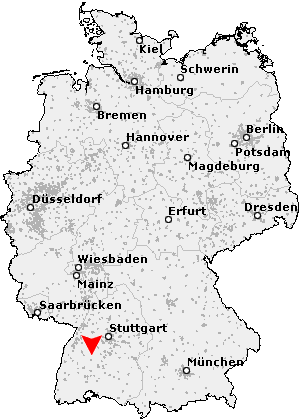
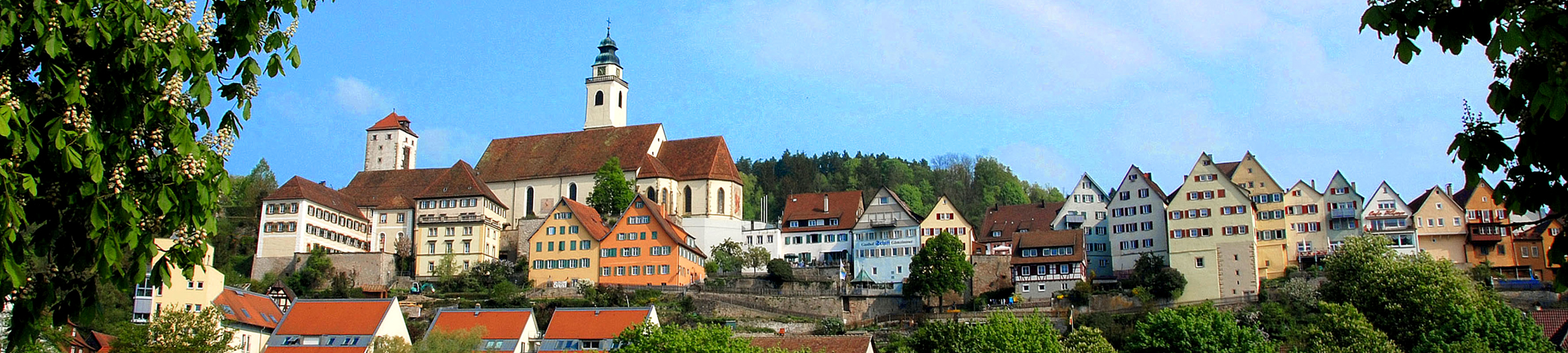
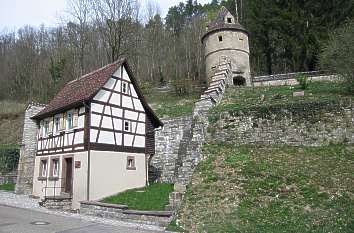
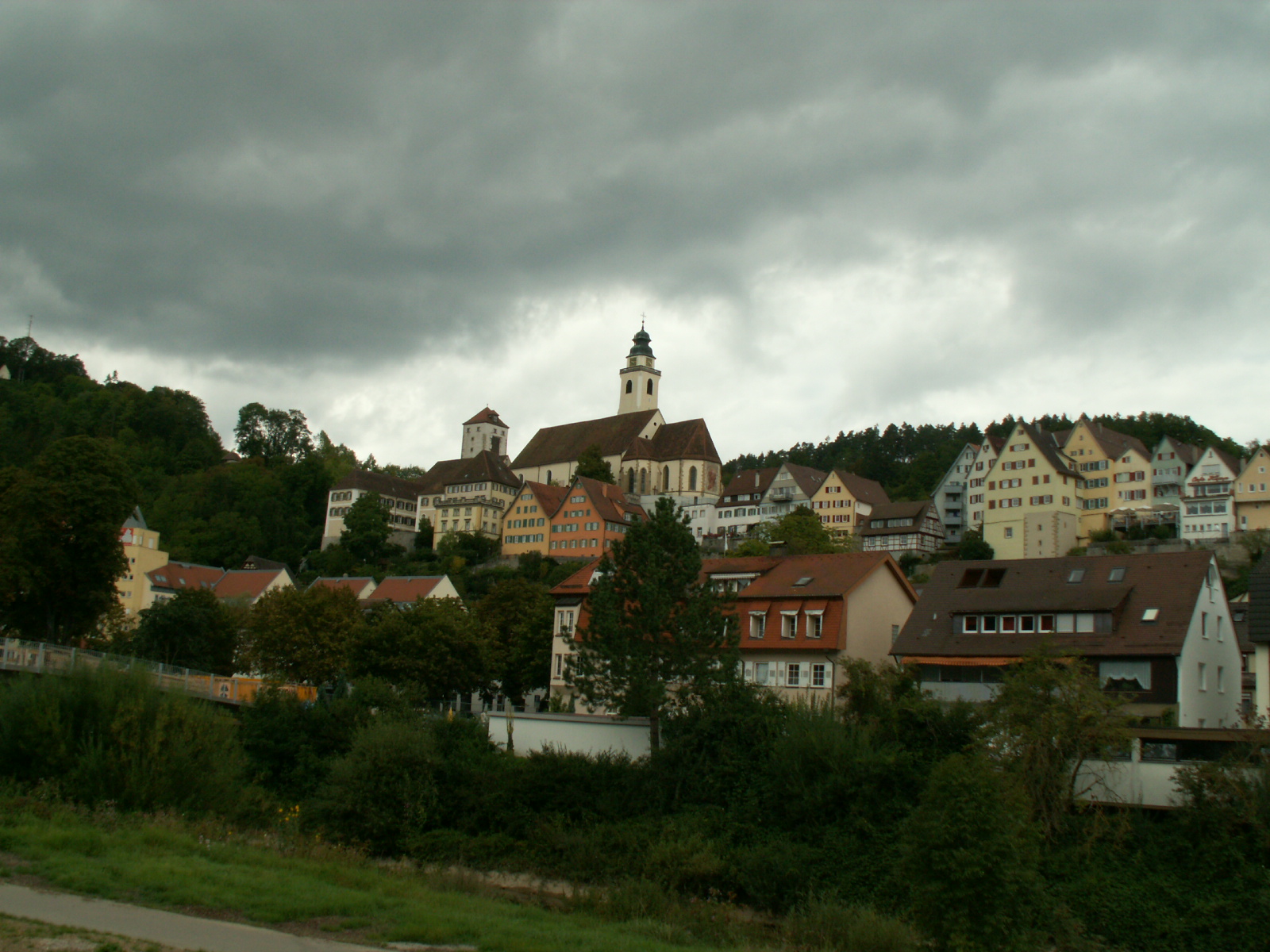
Immanuel spent all his life in Ludwigsburg. It looked like that at that times:

2. Wedding
The next document demonstrates who he had married to:

On the 31st January 1786 he married in Ludwigsburg to Christina Schelling. I was astonished by fact that her father Joseph Schelling had been mayor of "Bißingen an der Enz" (today's Bietigheim-Bissingen - the second-largest town in the district of Ludwigsburg, with 42,515 inhabitants in 2007. It is situated on the river Enz and the river Metter, close to its confluence with the Neckar, about 19 km north of Stuttgart, and 20 km south of Heilbronn.) To the end of the 18th century, it had been a small town with about 2,000 inhabitants:

Christina was born in July 1761 and died in December 1823. That is why, in 1824 when Immanuel died, he was marked as widow.

3. Job
Actually, we have already met this person, but we weren't aware of his name. Immanuel Gottlieb is the Hatter from Ludwigsburg about who I posted two years ago (May 2014).
In the 18th century, nearly everyone wore some kind of head covering, making the hat industry very important. A man’s hat advertised his social status. Hats that were more elaborate represented greater wealth or status. The hats were made of beaver skin, wool, cotton, or straw. The hatters knew how to make many different kinds of hats such as a knitted caps, broad-brimmed hats (which was the most popular), or upturned brim-tricorne hats (three-cornered hats).
Interestingly, part of the process of making hats involved “carroting” or washing the furs with a type of steaming hot, orange liquid. The liquid was full of mercury, which would attack the central nervous systems of the workers when it became airborne. Such workers would experience blurring of vision, loss of balance, delusions, and uncontrolled twitching of the muscles. This phenomenon would give rise to the statement “mad as a hatter.”

I hope he didn't suffer from it although i have no idea if such an occupation could cause the dysentery. Dysentery is a type of gastroenteritis that results in diarrhea with blood. Other symptoms may include fever, abdominal pain, and a feeling of incomplete defecation. It is caused by several types of infections such as bacteria, viruses, parasitic worms, or protozoa. The mechanism is an inflammatory disorder of the intestine, especially of the colon.
Net time, we'll talk about his family.
 Please, welcome Immanuel Gottlieb Schochenmaier.
He is grandson of the Staff Sergeant Johann Christian (1690s-1750s) from the Stuttgart Infantery Regiment "Alt-Württemberg" and son of the Cloth Manufactory's Master (within the royal Workhouse) from Ludwigsburg Johann Christian (1724-1799). The orphans of the regiment were educated in the Workhouse that also produced military clothes for soldiers and horses. So, it's the turn of the 3rd generation of the Württemberg family.
1. Years of life
Immanuel Gottlieb was born in 1759, February 6. We can spot his parents Johann Christian and Anna Margaretha.

He had lived for 74 years and died in 1834, September 29. Besides that, it's noticed that he was widow (Wtwr) and died from dysentery ("Ruhr"). Mistakenly, he is named "Gottlob" instead of "Gottlieb".

On first reading, he had been given a pretty strange name - Immanuel Gottlieb. As for Gottlieb, I must precise that he had the uncle named Christoph Gottlieb (born 1722, Oct.), elder brother of Johann Christian (1724-1799). So, it's probably the second traditional or inherited name. What about Immanuel? Well, there are two explantions. Firstly, he could be baptized in March or around this month. The name day of Saint Emanuel in Germany is (and was) on the 26th March and he was born in the beginning of February. Secondly, this name became fashioned at that time. Who is the most popular German philosopher? Immanuel Kant who had lived in Königsberg. When was he born? In 1724.
Immanuel spent all his life in Ludwigsburg. It looked like that at that times:

2. Wedding
The next document demonstrates who he had married to:

On the 31st January 1786 he married in Ludwigsburg to Christina Schelling. I was astonished by fact that her father Joseph Schelling had been mayor of "Bißingen an der Enz" (today's Bietigheim-Bissingen - the second-largest town in the district of Ludwigsburg, with 42,515 inhabitants in 2007. It is situated on the river Enz and the river Metter, close to its confluence with the Neckar, about 19 km north of Stuttgart, and 20 km south of Heilbronn.) To the end of the 18th century, it had been a small town with about 2,000 inhabitants:

Christina was born in July 1761 and died in December 1823. That is why, in 1824 when Immanuel died, he was marked as widow.

3. Job
Actually, we have already met this person, but we weren't aware of his name. Immanuel Gottlieb is the Hatter from Ludwigsburg about who I posted two years ago (May 2014).
In the 18th century, nearly everyone wore some kind of head covering, making the hat industry very important. A man’s hat advertised his social status. Hats that were more elaborate represented greater wealth or status. The hats were made of beaver skin, wool, cotton, or straw. The hatters knew how to make many different kinds of hats such as a knitted caps, broad-brimmed hats (which was the most popular), or upturned brim-tricorne hats (three-cornered hats).
Interestingly, part of the process of making hats involved “carroting” or washing the furs with a type of steaming hot, orange liquid. The liquid was full of mercury, which would attack the central nervous systems of the workers when it became airborne. Such workers would experience blurring of vision, loss of balance, delusions, and uncontrolled twitching of the muscles. This phenomenon would give rise to the statement “mad as a hatter.”

I hope he didn't suffer from it although i have no idea if such an occupation could cause the dysentery. Dysentery is a type of gastroenteritis that results in diarrhea with blood. Other symptoms may include fever, abdominal pain, and a feeling of incomplete defecation. It is caused by several types of infections such as bacteria, viruses, parasitic worms, or protozoa. The mechanism is an inflammatory disorder of the intestine, especially of the colon.
Net time, we'll talk about his family.


.png)