Tuesday, April 11, 2017

Johann Christian Schochenmaier Jr. aka Master of Workhouse's Manufactory


Today I'd like to move on with our series about German Schochenmaiers who had dwelled in Germany before they moved to the Russian Empire. In the last post we got to tknow abou the staff sergeant Johann Christian Schochenmayer (1680s-1750s) who had lived around Stuttgart and served  in the Infantry Regiment Alt-Württemberg (founded in 1716). As we know he had got al least 4 kids (highly unprobable because in the 18th century normally they had more children as lots of them didn't survive in their early childhood). I didn't find out what happened to Johannes (1719), neither to Johann Friedrich (1721), nor to Maria Katharina (1736) but I've collected some information concerning Johann Christian (1724). And he was pretty interesting person and he had an amazing job. Let's get start it!!!


1. Years of life

First how can we be sure when he was born and how long he had lived? It's easy. Although I didn't find any birth certificate, in his death register you can see how long was his life:


Now it's clear: Johann Christian had died on February 22, 1799. If he had lived for 75 years, he could have been born in 1724 (from March to December) or in 1725 (from January to February). He died in Ludwigsburg. By the way, it's noticed that he died from "Schwindsucht" - it's old German word for wasting (med.), consumption or phthisis which all mean "pulmonary tuberculosis". Well, now I understand why he died in the winter(((.

2. Wedding 

The next document demonstrates who he had married to:


On July 28, 1750 he got married to Anna Margaretha Wolf. If you read German, it's simple to decipher that she was daughter of Johann Georg Wolf (Wolffen is Wolf's, the old genetive case in the Southern German dialect). Her father was silk weaver ("Seidenweber" in German) that more or less corresponds to the profession of our ancestor and that's why it's very important.

Anna Margaretha was born on December 6, 1724 in Weiler and that is the same where her father worked as you can read off from the scan (Weiler, district of Schorndorf, about 30 km from Ludwigsburg and Stuttgart).


She had lived for 75 years and died on October 27, 1800 in Ludwigsburg. She worked as midwife (in German "Hebamme"). For me this fact is really impressive. I thought that up to the 20th century all "ladies" were sitting at home and doing nothing but it's not the case here! She died from "Naturnachlaß" what can be translated as "frailty of old age" or "give-up of nature". Let's count now: Johann Christian was 26 and Anna Margaretha 25 years old when they got married.

3. Job

And now the most important thing - his occupation)))


He worked as "Tuchmacher" - cloth-maker but where he worked is more interesting than that as he worked in "Arbeitshaus" (workhouse) and Zuchthaus (house of correction). I know what you think of. Of Oliver Twist and all stuff of that kind))) The associations we get while hearing or reading such things are not so positive but just imagine that the situation in the 18th century was considered from another view. For that time it was a new concept of treating the orphans through letting them to work and therefore to pay for themselves. However, we should be precise.  Our forefather Johann Christian worked not like a teacher or priest in the Workhouse but he was master of the cloth manufactory (factory for flannel and towels) where the children without parents should be working and trained in order to get their future profession.

There is another question: if we take into account that Johann Christian Sr. was staff sergeant, in this case why Johann Christian Jr. had radically changed his family's occupation. I can think of two answers. First, the 18th century was the time of industrial revolution and lots of new branches had been "opened". Second, the Infantry Regiment had been created only in 1716 although made up of volunteers from the existing household groups. I suggest those military groups could have their own professional occupation if they were just household ones. So, Johann Christian Sr. could have been a sort of weaver or cloth-maker before he entered the Alt-Württemberg Regiment.

As Workhouse was an official place where those unable to support themselves were offered accommodation and employment, there should be some info about it. What do we know about the workhouse in Ludwigsburg. There is no info in English, so I have to translate:

Cloth Manufactory in Ludwigsburg

In 1736 the cloth factory was founded together with the Ludwigsburg house of correction, workhouse and orphanage school. At the end of the 18th century it became independent. In 1826 the cloth manufactory was privatized for economic reasons. Files of the cloth factory before 1806 are in the stock A 244.


The cloth manufactory, which had been connected with workhouse and orphanage, had gradually decayed until it was newly established under the reign of King Frederick. It provided all the forced laborers and general laborers of the Kingdom with woolen spinnings and supplied cloths, horse blankets (or carpets?) etc. for the military and the court. Fine cloths were also made for sale.

Oh, now I can see the link between Johann Christian Sr. and Johann Christian Jr.: the first was military and the second provided military cloths, stuff and horse wraps))) 

The Ludwigsburg Workhouse was founded in 1736 by Duke Karl Alexander and received numerous privileges. A detailed historical description of the institution with a list of names of the staff can be found in the official register of the office: Büschel 13. The poor and orphan children were accommodated in addition to the prisoners of both sexes who had to wok in the cloth manufactory and other enterprises of the Workhouse like tobacco, silk, pile, porcelain and faience factories. Its own butchery and bakery, among other things, cared of the food of inmates. The workhouse was arranged for the reception of 290 male and 160 female prisoners.


The weaving took place in the Workhouse of learned clothmakers. The inmates of the male sex cleansed, caressed and combed the wool (after lessons) while the inmates of the female sex (mostly orphan girls) spun it. The children were admitted to the age of seven and remain until the age of fourteen, for girls somewhat longer. Then the boys are sent to artisans, and the girls go into service. Besides the lessons, the boys have to do the necessary services in the house, and the girls get the household, cooking, cleaning the rooms, making the beds, etc. Besides taht, the boys spin cotton and the girls knit and spin cotton and flax.

The work in the Workhouse looked like that ( clickable photos of the Workhouse in England):


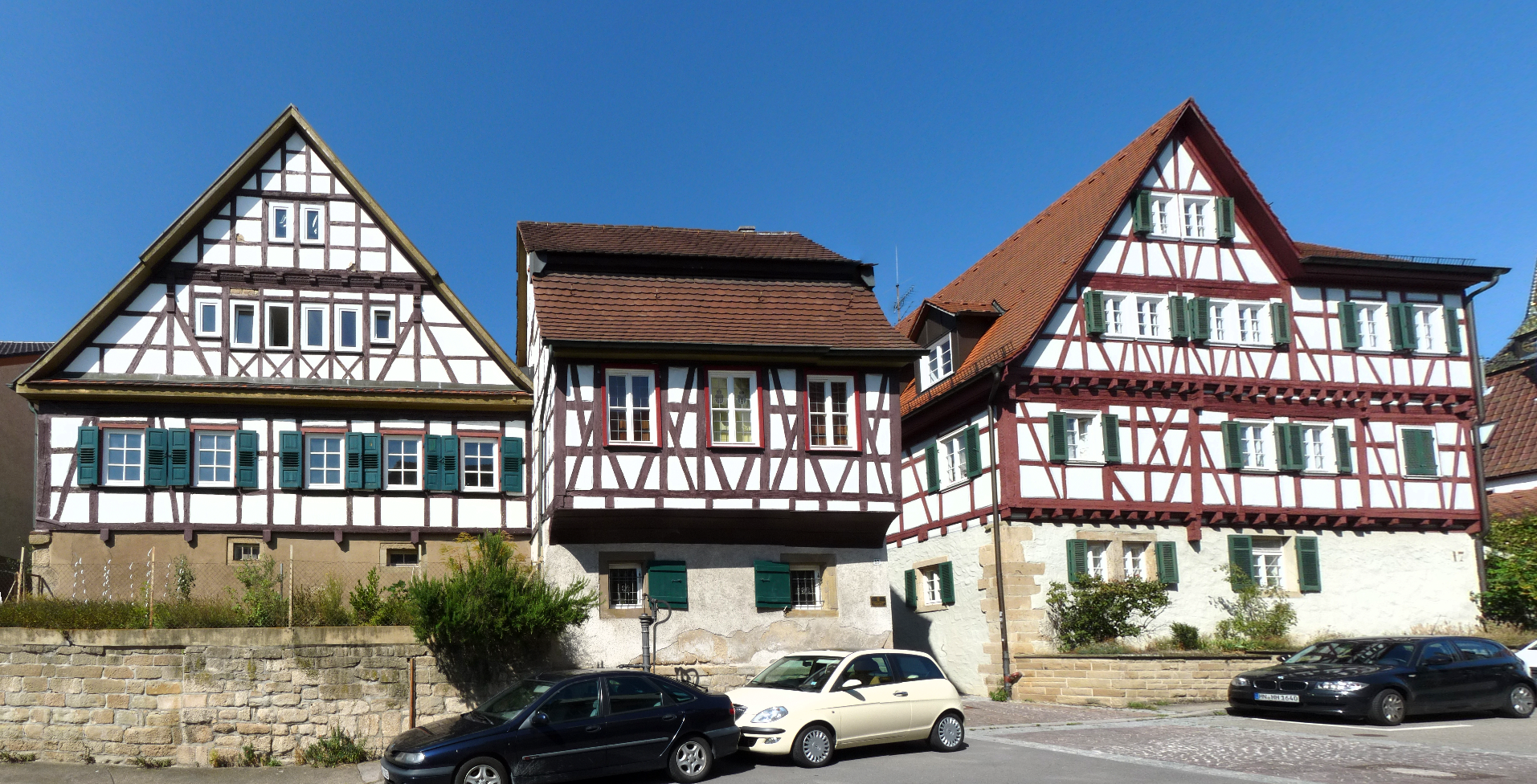
In 1746 an insane asylum was attached to the Workhouse. In 1752 the church and the school were built for the children as well. The male prisoners were separated from the female ones and transferred to the Gotteszell House of Correction in 1809, and the madhouse was relocated to the monastery of Zwiefaltenin in 1812. Two adjoining buildings, of which the southern part containing bakery, were formerly part of the cloth manufactory, served as a bread-bakery and bread-house with three baking ovens, two bakeries, two flour magazines and a cloakroom. Today it's on the Schorndorfer Street. A spinning house built in 1754, which was later used for straw-work, was later given to the inmates of the institution, as well as to a guard.


Besides that, the military orphanage was united with the orphanage in 1779 and expanded to accommodate 200 children. One more possible link with the Infantry Regiment. 

The cloth manufactory contains woolen spinning and hand-spinning mill, tapestry and cloth weaving factory, linen and cotton weaving mill, cobbler's (shoe repairing) and tailor shop. Their production was used by inmates, but floor carpets, winter shoes, male cloths, woolen socks etc. were sold to others in the city.

The entrepreneurs were therefore probably useful people for the country. Yet they complained bitterly about religious grievances. As a reformed, they were promised free religious practice on entering the country, and the court church in Ludwigsburg had been granted.

One of the oldest photos taken around 1900:


The entrance how it looks today:


And the main building:

I've found the names of other masters working there, maybe possible colleagues of Johann Christian, who knows:
Christoph Fronmüller, widow, born in 1710, was the first cloth-maker in the Workhouse. He should be 26 years old when the Manufactory was founded.
Peter Wallschmitt from Fritzlar, cloths manufacturer in the Ludwigsburg House of correction up to 1808
Karl Friedrich Jentsch from Neuruppin (Prussia) was the Master after 1808.

I think Johann Christian Schochenmayer could have worked with Peter Wallschmitt or prior to him because the lapse of time between 1736 and 1808 is pretty much long. The entrepreneurs and masters were therefore probably useful people for the country, but they complained bitterly about religious grievances. As reformed believers, they were promised free religious practice on entering the country by the Court Church in Ludwigsburg.

As the manufactory doesn't exist anymore, you can imagine how it looked like if you visit the Industrial Museum in Euskirchen:


Well, so far for today, next time I will show that I've found his own house's building application and we will take about his numerous children.

Sunday, March 5, 2017

Staff Sergeant Johann Christian Schochenmayer


Today I'd like to start (or continue) a new series of posts about German Schochenmaiers who had dwelled in Germany before they moved to the Russian Empire. We have already "met" Schochenmaier the Hatter from Ludwigsburg but it was only the beginning. Thanks to the Ancestry account of Janet Schochenmaier (Alberta, Canada) I've found lots of Schochenmaiers who seemed to be unrelated first but after you find "hidden" generations finally you get the whole picture).

Well, there are two branches of the Schochenmaiers in Germany: the ones from the Kingdom of Württemberg (left) and the others from the Grand Duchy of Baden (right).

 Image result for Königreich Württemberg Image result for Großherzogtum baden                                (the pictures demonstrate the German Empire of the 19th c.)

 Let's start with the biggest past - that of Württemberg. And we begin with the very first Schochenmaier of the Württemberg family tree -

                          Johann Christian Schochenmaier

We may conclude he existed from following records:

1. Birth

UNKNOWN, but, however, according to all below mentioned facts I conclude he had been born between 1680 and 1695.

2. Marriage (the earliest record ever!)

On the 9th August 1718 he married to Maria Christina Elisabetha Doebler in Kornwestheim:


    Here you can decipher the name Johann Schochenmajer (underlined with blue), but written in a very strange way, namely Schochen Majer! What does it mean? Maybe, it indicates the process of alloying Schochen and Maier together? Two lines below you can find the name of Maria         Christina and of course her father Johann Conrad Doebler (underlined with green) who should have approuved the marriage.
     Besides the names it is pretty difficult to decipher the rest of the handwritten text.
     But where is Kornwestheim?

Image result for Kornwestheim

It's Ludwigsburg's area close to Stuttgart (capital of Württemberg) and the scenary is more than just beautiful (pictures are clickable, views of the old town):

Image result for Kornwestheim Image result for Kornwestheim Image result for Kornwestheim Image result for Kornwestheim


3. Children:

In May, 4 1719 Johann Christian got his first baby:

Johannes Schochenmaier

 in March, 21 1721 the second child was born:
                             
                                         Johann Friedrich Schochenmaier

about 1724 there was the turn of the third:

                                      Johann Christian Schochenmaier

They were born in Heumaden (11 miles to the south from Kornwetsheim). Today it's almost a part of Stuttgart:


I'm sure that some information is missing but the last child I found is a girl born in 1736:

                            Maria Catharina Schochenmaier 

I don't know if the family moved away but the place of her birth is noticed the city of Freiburg or the area of Freiburg. It's far away for the people of the 18th century but it can depend on his professional occupation (see below).

4. Death

UNKNOWN, but after you get to know the next part, he should have died after 1750.

5. Occupation

It's the most exciting point of the story. The info can be read off from the marriage certificate of his son from July 1750 (whose father is underlined):


He was Feldwaibel (in German dialect) or Feldwebel (in Hochdeutsch). We read on Wiki:

literally "field usher", is a non-commissioned officer (NCO) rank in several countries. The rank originated in Germany, but it is also used in Switzerland, Finland, Sweden, and Estonia. (...) The Landsknecht regiments first installed Feldwaibel to keep the men at line at the battlefield.
Or from the dictionary:

Feldwebel is a German military rank which has existed since at least the 18th century with usage as a title dating to the Middle Ages. The word Feldwebel is usually translated as sergeant being rated OR-6 in the NATO rank comparison scale, equivalent to the British Army Sergeant and the US Army Staff Sergeant.
They looked as follows:

uniform_1792       thumbnail-by-url

What is more interesting is the fact that in the certificate we can see where he served - in Infantry Regiment Alt-Württemberg.


What's that? Well, I didn'f find any info in English, that's why I am going to translate:

900-221 Eberhard Ludwig.jpgBy contract dated December 24, 1715, Duke Eberhard Louis of Württemberg (1676- 1733) band himself to constitute an infantry regiment for the Emperor. The latter was 
- made up of volunteers thru the existing household groups 
- additionally recruited in Göppingen until 18 March 1716,
- inspected by the Duke on 17 May, 
- and committed on 19 May near Offenhausen (by Neu-Ulm) to the imperial Chief War Commissary 
- swearing himself to serve the Emperor. 

Then the regiment moved to Hungary (!!!).

After the armistice with Turkey, the regiment marched to Belgrade on July 16, 1718, and reached Mantua on October 5th. From the 6th December the march was continued from there to Naples, wherein it arrived on March 3, 1719. From there, the regiment was transferred to Sicily and remained there until the end of the lease. From the 20th June 1719 (date of the advertising to the recruitment) replacement was advertised. 

knoe02_21The last year of the history is probably not so important to us as we know that Johann Christian was got married in 1718 and got his first baby in 1719. By the way, in 1719 the troops came up to Sicily (see the pic). But what if he stayed in the Army and was dislocated with the Regiment? I am not sure that it was possible in the 18th century but it could explain why his last baby was born in Freiburg where the troops stood from 1744 (namely in Breisach).


The Commander of the Infantry Regiment at that time from 1716 to 1734 was Georg Ludwig von Forstner (1669-1734), then Heinrich Wilhelm von Heldenbrand up to 1735, then Prince Ludwig von Waldeck up to 1736.

Well, we don't know much what Johann Christian did there, in which wars he took part, but I'd like to find out it. I've contacted the Archives of Stuttgart and they responsed to me  that the info about the Infantry Regiment should be in the archives' collections A 28 to A33, in the Archives of the Administration of Duke Eberhard Louis (collection A5, records 70 - 72) where we can find the tables and figures of inspection (17th March 1716!) and finally the Papers of Duke Eberhard Louis (collection A6, records 25-26, 63-64) about the household troops, renegades, war invalids, salary tables, designations plus

1) The entire circular regiments by feet, 1710-1714
2) District Regiment Baden-Baden by feet, 1711-1715
3) District Regiment Baden-Durlach by feet, 1714-1715
4) The 3 regional regiments on horseback, 1711-1718
5) Garrison in Kehl, 1715-1721
6) Württemberg District Regiment by feet, 1713-1720
7) Wuerttemberg Regiment by feet, 1716-1720

So, I have to go to Stuttgart. However, it's already the next story)))

Friday, February 3, 2017

Visiting Alwina Koch (nee Schochenmaier) born in 1927

We started the new 2017 with visiting Alwina Koch (nee Schochenmaier) and celebrated her 90th birthday. She is the third oldest Schochenmaier all over the world!!! She is daughter of Jacob Schochenmaier (1896-1937) amd Margaretha Grauer (1899-1952). 


Her life wasn't easy. In 1943 when some of the Black Sea Russian Germans moved westbounds together with the Germans who occupied the Ukraine, the Alwina's husband had to join the notorius German SS. After the WWII came to its end, he had been arrested and got 25 years of prison in the Soviet Siberia (GULAG). He survived the Stalin era, Alexander was released under Khrustschev in the 1960s and he could finally go to his family deported to the Kazakhstan's steppes in 1946. In the down of the 90s they all got repatriated to Germany.

In the photo, you can see me on the Alwina's left in the checked shirt, left to me is Walter Wahler (nephew of Oma Alwina), his brother with the guitar and the people behind the Oma are her children.  

Monday, December 12, 2016

Churches of the Schochenmaiers (New World, part 3b)

Today, I'm going on with making list of churches which could be attended by the Schochenmaiers.

I stress one more time as I don't know about every moving into various places around New World, the easiest way for me is to follow the "first" Schochenmaiers where they got children (birth places) and where they were registred (national and state census).


Jacob Schochenmaier (1861-1923) 

In May 1886 Jacob had immigrated to the United States through New York. He was 24 years old. Eight months later his son Jacob (1887-1975) was born in Alexander (McKenzie county, North Dakota). He was Jacob's first child (first Schochenmaier who had been born in America). 


I don't understand how it would have been possible because on Wikipedia you read as follows: 


Alexander is a city in McKenzie County, North Dakota, United States. The population was 223 at the 2010 census. Alexander was founded in 1905 and is named after early North Dakota politician Alexander McKenzie.

If the town had been found in 1905, how could he have born in 1887 there??? But maybe he had lived around that place))) 


I've found four churches in Alexander, ND: 

1. Alexander Church of the Nazarene

2. Highland Lutheran Church

3. Our Lady of Consolation Catholic Church

4. Trinity Lutheran Church

But there is only one photo of a church (which one???) next to the school building 


In November 1893 Mary (Maria) was born. I haven't found any precise information on where she had been born. Sometimes it was noticed just "Canada"... Well, we've got nothing.  However, it sounds pretty strange ... in 1887 Jacob was born in the U.S., 6 years later his sister is to be born in Canada and then 4 years later Paul and Samual were born in the U.S. again... It means within 10 years they had relocated twice with two little children... From Alexander (ND) to Canada there are only 120 miles by car.

In 1897 Paul and Samuel, 1898 -Emanuel were born in Lynch, Nebraska. With Paul we can be sure, but there are some doupts concerning Samuel (if Paul wasn't born earlier! for example, in 1896). By the way, from Canada to Lynch (NE) they count up to 600 miles!!!

http://www.mapave.com/map_city_in_usa.php?state=NE&city=Lynch+Village&long=-98.465833&lat=42.830000&width=400&height=270


There are five churches: 

Lynch Wesleyan Church

Christ Lutheran Church

Assumption Blessed Virgin Mary Church (Catholic) 

Lynch United Methodist Church

Adventist Church 


Wesleyan Church


Lutheran Church 

In 1900 David, 1903 Charlotte and 1904 Lydia were born in Goodrich (Sheridan County, North Dakota). It's in 410 miles away from Lynch (Nebraska). About Charlotte and Lydia we cannot be absolutely sure, we just know they were born in North Dakota. Sometime for the last daughter it's noticed "Canada". According to other data, David was born in Harvey (Wells County, North Dakota). What a mess((( But it's important to point out that between Harvey and Goodrich there are about 30 miles. 

Harvey, ND locator map 

Harvey is a city in Wells County, North Dakota, United States. The population was 1,783 at the 2010 census. Harvey was founded in 1893 as a division point by the Soo Line Railway. According to the book published in 1981 on the 75th anniversary of the town's incorporation as a city in 1906, Harvey, ND is believed to have been named for a director of the Soo Line Railway: Col. Scott William Harvey of Minneapolis, Minnesota.

http://faculty.salisbury.edu/~flerickson/images/harvey%20main%20st%201909_small.jpg 

http://faculty.salisbury.edu/~flerickson/images/bev%20harvey.jpg 


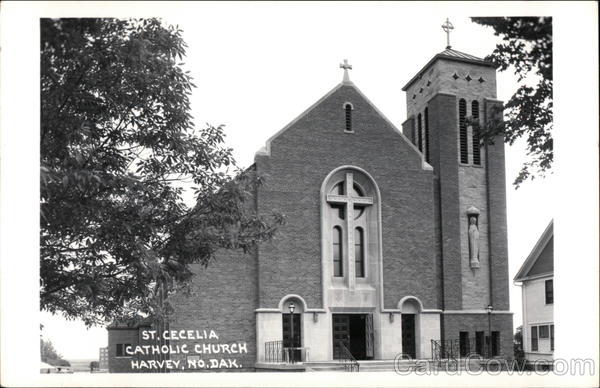
There a lots of churchs in Harvey. Below you'll find some of them whose pics are on the net: 

File:HarveyMBChurch1948.jpg 
Harvey Mennonite Brethren Church, 1948

https://www.cardcow.com/images/set384/card00504_fr.jpg 
St. Cecelia Catholic Church

http://mw2.google.com/mw-panoramio/photos/medium/81955004.jpg 
Bethel Church east of Harvey

http://www.dakotasumc.org/media/files/NEWS_2014/harvey_church.jpg 
Wesley United Methodist Church

http://www.inforum.com/sites/default/files/styles/16x9_620/public/fieldimages/15/0524/harvey-church2.jpg?itok=oaE_Bd5O 
First Lutheran Church

http://www.victorybaptistharvey.com/wordpress/wp-content/uploads/2013/07/ChurchFront.jpg 
Victory Baptist Church

Let's switch to Goodrich:
 

http://pix.epodunk.com/locatorMaps/nd/ND_52813.gif

 Goodrich is a city in Sheridan County, North Dakota, United States. The population was 98 at the 2010 census. Goodrich was founded in 1901.

 Have you noticed? It's the same situation as with Jacob (1887)))) David was born in 1900 in the township that would have been founded one year later. I start sugessting it's OK. 

I've found five churches therein: 


and Church of God


After having discussed with some of the Jacob's descendants, I can conclude that most of them are Adventists. I do realize that the subject is more than just delicate but ceveral persons made suggestions that the split between Michael (1859) and Jacob (1961) had been caused by that religious reasons. The descendants of Michael are mostly reformed Protestants (among others Baptists plus several Catholics, etc.) The question is since when Jacob was converted to Adventism? I've found the Jacob's immigration certificate from year 1923 where Jacob noticed that he was Baptist. Actually, it doesn't fit very well because at that time the brothers were not in the narrow communication anymore((. So I do not rely 100 per cent upon these thoughts. 

All corrections are welcome!!!